Innovations and Technology beyond Physics: Staring at Philosophy
In today’s competitive world, everyone is trying to do something different, aspiring to rise at the speed of light. Focus on innovations has increased multifold in the last decade. Whenever you do any work, five forces must work in favor to achieve the goal. These are explained in Hindu philosophical epic Bhagavad Gita (Chgapter18, Verse14):
अधिष्ठानं तथा कर्ता करणं च पृथग्विधम् |
विविधाश्च पृथक्चेष्टा दैवं चैवात्र पञ्चमम् || 14||
adhiṣhṭhānaṁ tathā kartā karaṇaṁ cha pṛithag-vidham
vividhāśh cha pṛithak cheṣhṭā daivaṁ chaivātra pañchamam
The body (house of the soul), the doer (soul)responsible for the body-mind-intellect mechanism, the various senses, the various efforts, and Divine Providence over people’s life—these are the five factors of action that make a work successful.
When we talk about quantum everything is based on philosophy, the academics alone cannot answer the questions of nature. Physics itself is a Greek word meaning nature and when we talk on this subject human life, soul, death, senses, intellect, perception, and afterlife become stakeholders and each one of these needs to be considered before reaching any conclusion.
The way people try to invent things and do research has become a mechanical process, that’s the reason the research projects are running in isolation in a confined area. Nowadays education in a particular subject entitles you to do research, you dedicate your whole life to a subject to invent something in isolation from other aspects of life. This was not the way, the innovations have been done in the past, every scientist had expertise in multiple fields and dedicated a good amount of time in each area to gain the expertise.
Time has arrived when we need to expand the scope of Physics and other science streams, philosophy, sociology, and psychology must work together to invent something meaningful for ages. In schools, we were taught Pythagoras’s theorem, formula only and we just moved forward with the formula as the foundation of our geometry knowledge same with Thomas Young’s waveform or Joseph Fourier’s work, likewise, several examples are there where we never bothered to peep in their lives and circumstances these grand inventions took place.
This is the right time to educate Gen Z about these personalities and their expertise in diverse areas. Let’s start with Greek philosophers Pythagoras, Thales, and Polymath Thomas Young, these all were experts in multiple domains with absolute expertise. This proves that one need not be a master of one subject only, one should pursue everything possible that attracts. Let’s see the contribution of these great personalities in other domains that were shadowed.
Thales of Miletus (623 – 545 BC) is known as the first philosopher in Greek history. He was an engineer, and astronomer who predicted the weather and solar eclipses also credited for discovering the position of the constellation Ursa Major, he a mathematician known for Thale’s theorem also known to have calculated the heights of the Pyramids and the distance of ships from the shore. Thales states ‘God is the most ancient of all things, for he had no birth”. He is credited with the saying “Know thyself” which was inscribed on the Temple of Apollo at Delphi. He believed that all of nature is based on a single ultimate substance Water. Thales thought the Earth floated in the water.
“Pythagoras (570 – c. 495 BC) when he was asked what time was, answered that it was the soul of this world.’ As quoted in Wisdom (2002) by Desmond MacHale
All physicists believe in the existence of the soul, Pythagoras believed in metempsychosis or reincarnation, according to which human souls were reborn into other animals after death. Aristotle emphasized his superhuman; Pythagoras was seen on the same day at the same time in both Metapontum and Croton. Pythagorean way of life was the emphasis on dietary restrictions. Pythagoras is known for his expertise in religious rituals. Pythagoras took the advice of Thales to heart and traveled to Egypt. He left as a young man and spent a long time in Egypt (perhaps decades) learning the mathematics and ancient religious mysteries of the Egyptians.
He invented the words philosophy and/or philosopher.The word philosophy is the combination of two words: philo-meaning “to love”, Sophia meaning “wisdom, learning”
Before Pythagoras, the term cosmos meant “order; decoration”. With Pythagoras, it acquired the meaning “the (beautiful) order of the universe”.
Thomas Young (1773 – 1829 A.D) was a British polymath described as “The Last Man Who Knew Everything”. He was instrumental in the decipherment of Egyptian hieroglyphs deciphering the Rosetta Stone. He was competent in Greek, Latin, Arabic, and Hebrew apart from French, German, and Italian. He worked in the fields of vision, light, energy, mechanics, language, physiology, musical harmony, and Egyptology. He had performed an experiment known as a double slit experiment that showed that light behaves as a wave. Thomas Young presented a serious challenge to Newton’s ideas on the nature of light which have been proved right later.
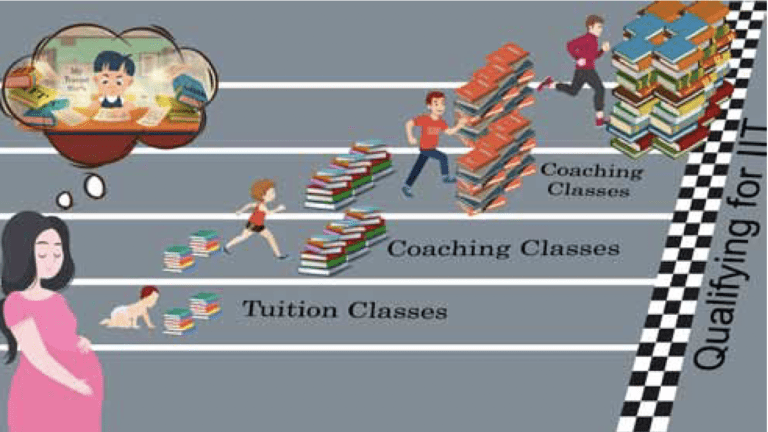
Young has made a great contribution to physiology and devised a rule of thumb for determining a child’s drug dosage. Young’s Rule states that the child’s dosage is equal to the adult dosage multiplied by the child’s age in years, divided by the sum of 12 plus the child’s He gave lectures on various subjects “Functions of the Heart and Arteries,” where he derived a formula for the wave speed of the pulse. Now the question arises, how a one person does so many things, it is possible if we give the choice of learning instead of a fixed curriculum to kids where they can explore themselves rather than define their future based on competitive academic exams. Now it is time to look back at our education system and the development of kids in a natural way. Teach them not only the formulas of these great personalities but about their life also where they can also gain confidence in learning unrelated things and connect with their thoughts, that’s philosophy.