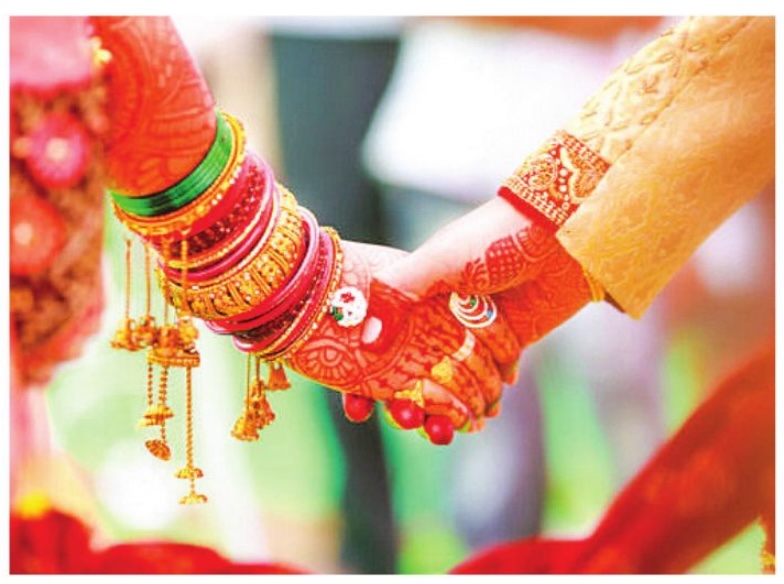
LOVE’S PYRE, HONOUR’S TOMB
“Militat omnis amans.” – Ovid, Amores LIX
“Every lover is a soldier”
From ancient times, marriage in India has been envisioned as a sacred bond, not merely a social contract or a religious ritual. The Hindu scriptures speak of love, respect, and partnership between husband and wife-a vision where a woman is honoured and dignified within her new family.
Yet alongside this ideal lies a stark reality: a woman’s choices, especially in love and marriage, have always been tightly controlled. Ancient texts acknowledged love marriages Gandharva Vivaha based on mutual desire. Yet even these texts warned that such unions were unfit for high-born noble families. Marriage, they insisted, must preserve caste boundaries and social order-even at the cost of a woman’s happiness.
This tension between sacred love and strict control runs through India’s most moving love stories. Sohni Mahiwal drowned while trying to reach her beloved across a river. Heer and Ranjha died because their families refused to accept their bond. Shirin and Farhad’s love ended in death, crushed under royal pride and social barriers. These legends persist because they show how love has long been seen as a dangerous threat to family and community honour.
Yet the burden placed upon women begins far earlier, from the moment a daughter is born. In many households, the birth of only girl children carries unspoken shame. Such shame is unwritten, yet it dictates social behaviour with ruthless efficiency. Girls grow up learning that their bodies, choices, and even silence are seen as the family’s fragile shield. Unwritten rules follow them everywhere: do not speak too loudly; do not look at boys; do not laugh too freely; do not fall in love. This relentless conditioning becomes a cage.
Modern India has not escaped these ancient chains. Young women still fall in love across lines of faith, caste, or gotra. And when they do, their families often respond-not first with physical violence-but with words sharp enough to wound: “We’ll drink poison.” “We’ll kill you.” “We’ll never show our faces in society again.” Emotional blackmail traps daughters, forcing them into marriages with men they do not love. Yet the punishment does not end at the wedding. Some women spend years suffocating beside men who feel like strangers. Others attempt to break free, facing renewed storms of blame and violence. And tragically, some women become victims of honour killings, for they know precisely how their families “resolve” the question of dishonour.
The data is chilling. According to the National Crime Records Bureau, over 145 honour killings were recorded in India between 2017 and 2021. Experts believe the actual numbers are far higher, buried under euphemisms like “suicide,” “accident,” or “domestic violence.” In Shakti Vahini v. Union of India (2018), the Supreme Court declared: “Any kind of torture or illtreatment that tantamounts to atrophy of choice of an individual relating to love and marriage by any assembly, whatsoever nomenclature it assumes, is illegal and cannot be allowed a moment of existence.” Yet convictions remain scarce.
In many states of northern India, khap panchayats, without any legal authority, operating like a local legal system with self-nominated judges and lawyers continue to wield alarming influence. They forbid same-gotra marriages, inter-caste unions, and love marriages altogether. Couples who defy these dictates risk exile, violence, or death. Despite repeated Supreme Court rulings declaring such orders illegal, khap influence remains deeply entrenched, nourished by the same false ego that equates honour with controlling women’s lives.
Once a girl marries outside her caste or faith, families fear total ostracism. No one will marry her sisters. Relatives sever ties. Parents are shunned for failing to “control” their daughter. The punishment is collective: entire families face social boycott; brothers and sisters lose marriage prospects; parents are labelled dishonourable. This grim reality makes honour killings not merely acts of personal violence, but crimes propelled by a suffocating social ecosystem. Honour becomes a weapon wielded to police private lives.
Yet another question often goes unasked: What becomes of the young man who loved the girl who has been murdered? Society rarely pauses to ask whether he, too, survives with shattered hopes, carrying guilt, fear, and a future permanently scarred. Can he return to an everyday life, knowing that his love cost someone her life? In many cases, both lovers are killed together, and two families are left ruined in the name of “honour.”
At the heart of honour killings lies a profound hypocrisy. Society wields a double-edged sword. If a father kills his daughter for love, people condemn the violence, calling it barbaric. Yet if a woman, forced into marriage, runs away or even kills the husband she never loved, the same people brand her as immoral and shameless. How can a society claim moral authority when it condemns both the violence of the oppressor and the desperate acts of the oppressed? How can anyone claim it is justice? It reveals that what is called “honour” is rarely about virtue or dignity. It is about control, fear, and maintaining a social order that subjugates women’s choices. It is crudely disguised as pride.
Let us never forget: women have always borne the weight of their choices with courage. They belong to the same lineage that once chose jobar over dishonour, embracing flames rather than surrendering their pride and virtue. Even Sati stepped into the fire for her husband’s honour.We must learn to trust women. To question them when conscience demands it. To offer counsel, and to walk away if a relationship turns abusive or suffocating. But we must never burn them, cut them, or shoot them.The right to take a human life belongs to God alone-for love, in its true essence, is never demonic. Love is a soldier; it marches on, demanding sacrifice, but never cruelty. It is hatred and violence that turn human beings into monsters.
Also View in The Daily Guardian