Leadership Plagiarism: A threat to cognitive thinking
Leaders who resort to plagiarism mislead society and relinquish their duty to lead with integrity and originality. Their actions have a profound influ-ence, emphasising the critical necessity for them to foster independent thinking and uphold the precepts of ethical leader-ship. By doing so, they establish a positive example for others to emulate.
Our world has undergone significant changes throughout history due to both natural occurrences and human inge-nuity. From the invention of the wheel in Mesopotamia to the ground breaking technological advancements of modern times, every innovation has been born out of the need for convenience and necessity. In ancient societ-ies, wise and courageous individuals were pivotal in guiding and leading their communities.
However, today, plagiarism isa potential threat as leaders may need to think of more appropriate ideas from others.
In the technology world, the need for genuinely impactful innovation in the past decade can be attributed to the prevalent tendency among tech companies to imitate rather than engage in independent, innovative thinking. This conformity stifles genuine progress. The focus on early market entry often takes precedence over understanding user needs. New trends quickly replace rushed products. The solution lies in promoting independent thinking and discouraging imitation.
Leaders, as the vanguards of change, must carefully analyse and make thoughtful decisions before moving forward. True innovation happens when leaders are unbiased and think independently. By promoting independent thinking, leaders can foster a sense of trust and respect among their followers, encouraging them to think creatively and generate new ideas.
In the realm of global leader-ship, a notableconstraint exists in the form ofa binary decision-making framework centred on the ideologies of Right and Left. This framework stifles the development of alternative viewpoints and belief systems.
The lack of alternative options constrains the ability of novel ideas and ideologies to thrive within the leadership sphere, particularly in the face of rapidly evolving global challenges.
It is imperative to explore alternative approaches. By doing so, leaders can foster a sense of adaptability and resilience, enabling them to effectively navigate our changing world.
The current political situation is worrying. Political leaders and parties seem to copy each other’s ideas and focus on staying in power, leading to poverty and unfair gifts instead of helping the people. There has been little real change for seventy-seven years, so it’s clear that we need more deter-mination. Leaders should focus on making significant, positive changes by not copying others and improving regular people’s lives. Every election, millions of people hope for new changes to make their lives better. But after they vote, they feel let down. We need new ideas and policies to make a real difference in people’s lives.
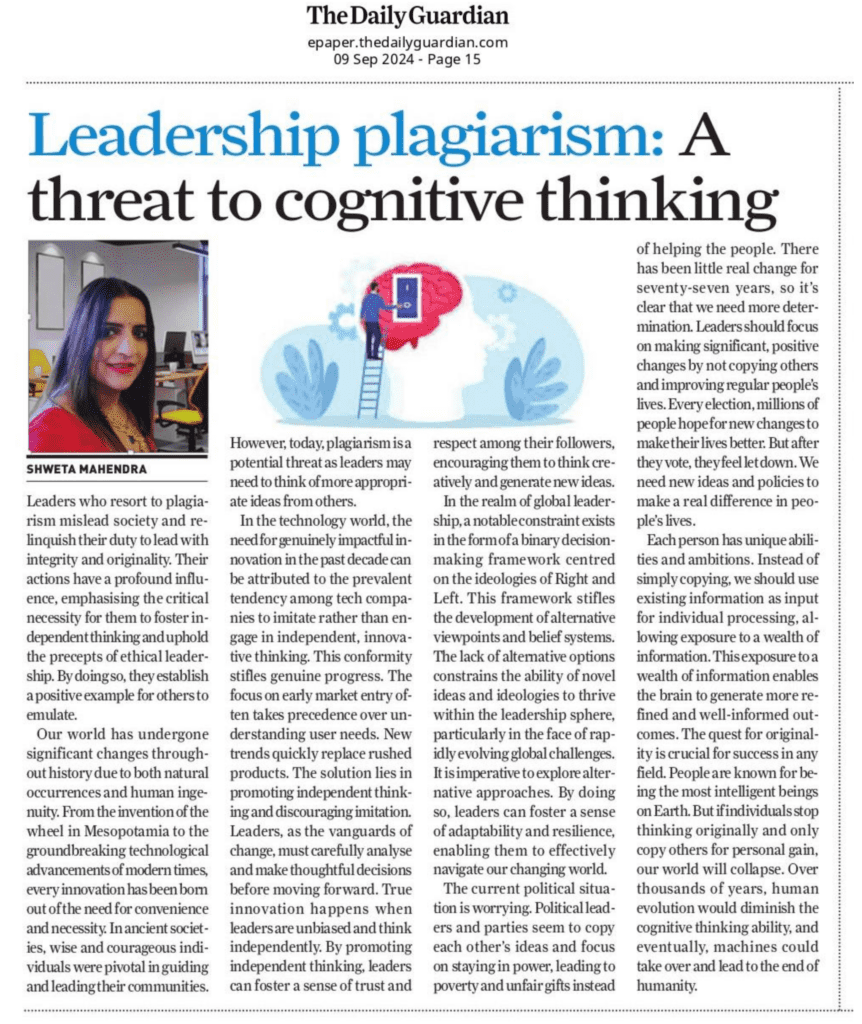
Each person has unique abilities and ambitions. Instead of simply copying, we should use existing information as input for individual processing, allowing exposure to a wealth of information. This exposure to a wealth of information enables the brain to generate more refined and well-informed out-comes. The quest for originality is crucial for success in any field. People are known for being the most intelligent beings on Earth. But if individuals stop thinking originally and only copy others for personal gain, our world will collapse. Over thousands of years, human evolution would diminish the cognitive thinking ability, and eventually, machines could take over and lead to the end of humanity.
Also View in The Daily Guardian